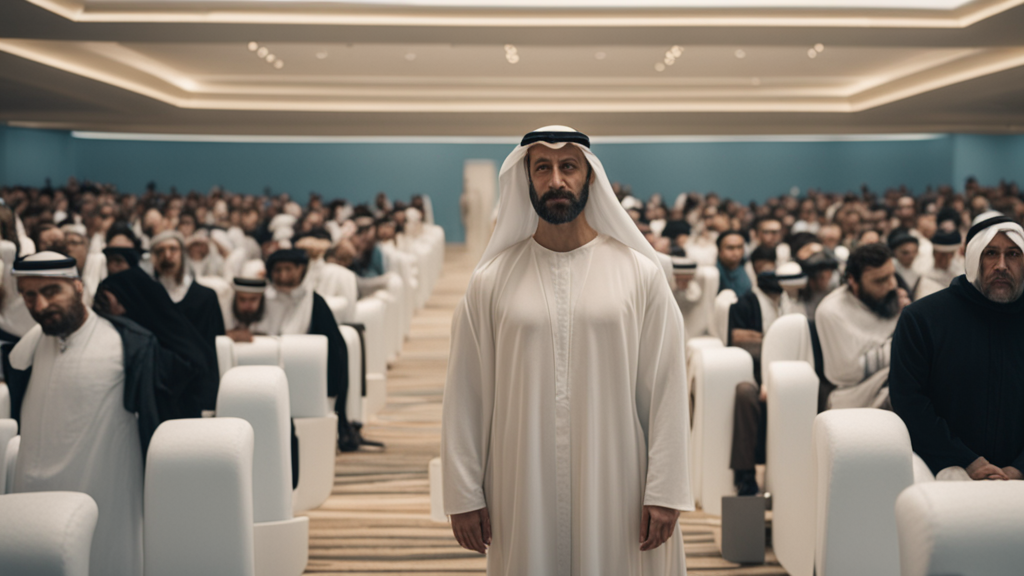
A Revival Without Roots? Closing the Discipleship Gap in the Middle East Before It’s Too Late
The Hidden Spiritual Conflict
The headlines are extraordinary: spontaneous baptisms, Scripture smuggled on phones, living rooms turned into house churches. Across the Middle East, testimonies multiply of Jesus appearing in dreams, of refugees finding hope, of atheists and nominal believers being surprised by grace. Yet in the swirl of miracles, one phrase keeps surfacing from field workers: a discipleship gap. Converts are coming to Christ faster than the Church can form them.
This is not a small administrative problem. It is a spiritual battleground. Hell does not fear conversions; it fears disciples. Jesus did not command, “Go and make converts,” but, “Go therefore and make disciples of all nations” (Matthew 28:19). Discipleship is not optional post-processing. It is the mission. Where discipleship is thin, spiritual predators thrive, and fragile faith gets uprooted (Mark 4:16–17).
Why is this gap so dangerous now?
- Persecution is rising, which means believers need deep roots to endure (2 Timothy 3:12).
- Information overload—social media, AI, and viral doctrines—travels faster than vetting does (2 Peter 2:1).
- Rapid growth without shepherding creates a vacuum that false teachers fill (Acts 20:29–30).
Satan’s tactic hasn’t changed: if he cannot stop the seed from being sown, he will choke it before it bears fruit (Mark 4:18–19). The revival is real. The opposition will be, too. This is the hidden conflict—can the Church in the Middle East move from spark to furnace, from first love to faithful witness, from awakening to endurance?
This moment demands that we ask a deeper question.
What the Bible Really Says
The Bible is not vague about revival or discipleship. It shows us how God moves—and how his people must respond.
1) Revival Without Roots Is Vulnerable
Jesus described the dynamics of revival in the Parable of the Sower:
“The one on rocky ground is the one who hears the word and immediately receives it with joy; yet he has no root in himself, but endures for a while, and when tribulation or persecution arises on account of the word, immediately he falls away.” (Matthew 13:20–21)
Joy without roots fails under pressure. In the Middle East, where following Jesus can cost family, work, freedom, or life, roots are not optional. They are life support.
Paul had the same concern for young churches:
“We exhorted each one of you… that no one be moved by these afflictions.” (1 Thessalonians 3:3)
He sent Timothy “to establish and exhort you in your faith” (1 Thessalonians 3:2). Establishing believers is discipleship. It is pastoral urgency, not a luxury.
2) Jesus’ Method Was Relationship, Not Just Content
Jesus trained disciples life-on-life, not event-to-event. He called them to be with him (Mark 3:14). He modeled, explained, sent, corrected, and restored (Luke 9–10; John 21:15–19). The Great Commission is explicit:
“Go therefore and make disciples of all nations, baptizing them… teaching them to observe all that I have commanded you.” (Matthew 28:19–20)
Teaching to observe is more than information transfer. It is formation—habits, holiness, mission, endurance.
Paul embraced the same pattern:
“What you have heard from me… entrust to faithful men who will be able to teach others also.” (2 Timothy 2:2)
This is a four-generation chain (Paul → Timothy → faithful men → others). It’s reproducible, decentralized, and resilient—exactly what persecuted movements require.
3) The Word and the Spirit Build Immovable People
The early Church devoted themselves to the apostles’ teaching and the fellowship, to the breaking of bread and the prayers (Acts 2:42). This rhythm created durable disciples. Scripture saturates the mind; the Spirit strengthens the inner person (Ephesians 3:16–17). Both together produce steadfastness:
“Let the word of Christ dwell in you richly.” (Colossians 3:16)
“Walk by the Spirit, and you will not gratify the desires of the flesh.” (Galatians 5:16)
A discipleship movement that neglects the Word grows thin; one that neglects the Spirit grows brittle. The Middle East needs both: Bible in the heart language and Spirit-empowered obedience.
4) Suffering Is a Discipleship Classroom, Not a Detour
Peter prepared the Church for fiery trials:
“Beloved, do not be surprised at the fiery trial… but rejoice insofar as you share Christ’s sufferings.” (1 Peter 4:12–13)
Suffering refines faith (1 Peter 1:6–7), exposes idols, and matures love. When persecutions come, we don’t promise escape; we prepare endurance (Hebrews 10:36). The Middle East is teaching the global Church how to read the Bible in the key of perseverance.
5) Leaders Must Guard the Flock From Wolves
Paul warned the Ephesian elders:
“Fierce wolves will come in among you, not sparing the flock; and from among your own selves will arise men speaking twisted things.” (Acts 20:29–30)
Discipleship includes doctrinal clarity. New believers must be taught the whole counsel of God (Acts 20:27)—the gospel of grace (Ephesians 2:8–9), the call to holiness (1 Peter 1:15–16), the Lordship of Jesus (Philippians 2:9–11), the reality of spiritual warfare (Ephesians 6:10–18), and the hope of resurrection (1 Corinthians 15:3–8, 20–28).
6) The Church Is God’s Discipleship Engine
God does not disciple lone rangers; he forms a people. The metaphors are communal: body (1 Corinthians 12), household (Ephesians 2:19), temple (1 Peter 2:5). The gifts of the Spirit are given to build up the church until we all attain maturity (Ephesians 4:11–16). Apostles, prophets, evangelists, shepherds, and teachers are not celebrity platforms; they are equipping graces so that every believer grows into Christ.
This is crucial in environments where public gatherings are risky. House churches, micro-fellowships, and networks still express the church’s essence: Word, sacrament, prayer, discipline, mission, and love.
7) Scripture Anticipates Rapid Growth—and Provides Guardrails
Acts records explosive expansion (Acts 6:7; 9:31; 12:24). The response was not to slow the mission but to organize care. When distribution faltered, godly leaders appointed Spirit-filled servants (Acts 6:1–7). When Gentiles believed, the Jerusalem church sent Barnabas to strengthen them, and he fetched Paul to teach for a year (Acts 11:22–26). Growth sparked structure; structure fueled more growth.
The biblical pattern is clear: when God pours out revival, the Church must pour out discipleship.
3 Steps for Believers Today
The “discipleship gap” in the Middle East is not their problem; it is ours. If we are truly one body, then we carry one another’s burdens (Galatians 6:2). Here are three urgent steps every believer and church can take now.
1) Strengthen the Roots: Scripture Access, Training, and Reproducible Tools
-
Prioritize Scripture access. Pray and give toward distributing Bibles—physical and digital—in heart languages (Romans 10:17). Scripture memory plans, audio Bibles for oral learners, and story sets can thrive in closed contexts.
-
Support reproducible disciple-making frameworks. Tools like three-thirds discipling (look back, look up, look forward), discovery Bible studies, and obedience-based training mirror Acts 2:42. They require minimal infrastructure and multiply leaders.
-
Fund and mentor emerging shepherds. Paul sent Timothy and Titus to consolidate churches (1 Timothy 1:3–5; Titus 1:5). Today this looks like supporting indigenous trainers, safe-house residencies, secure online cohorts, and trauma-informed pastoral care. The goal is Ephesians 4:12 maturity, not dependency.
-
Build doctrinal clarity. Simple, transferrable catechesis—Who is God? What is the gospel? What is the church? How do we live?—fortifies against error (2 Timothy 1:13–14). Provide short, vetted curricula that fit persecuted contexts.
Why this matters now: persecution and misinformation are accelerating. Roots must go deep quickly. Without the Word richly dwelling, zeal will outrun wisdom; with it, zeal becomes steady fire.
2) Shield the Flock: Prayer, Pastoral Oversight, and Digital Discernment
-
Commit to intercession. Paul pled for prayer “that the word of the Lord may speed ahead and be honored” and “that we may be delivered from wicked and evil men” (2 Thessalonians 3:1–2). Organize prayer chains for specific cities, leaders, and house churches. Fast weekly. Name nations before the throne (1 Timothy 2:1–4).
-
Partner for pastoral covering. Acts 11 shows Jerusalem sending Barnabas to Antioch. Churches in open countries can spiritually “send Barnabases” through short-term intensives, long-term fellowships, and ongoing coaching—securely, humbly, and under local guidance.
-
Equip for digital discernment. Many Middle Eastern seekers first meet Jesus online. That means they also meet wolves online (2 Peter 2:1–3). Provide vetted content hubs, clear statements of faith, and simple tests: Does it exalt Christ crucified and risen (1 Corinthians 2:2)? Does it align with Scripture (Acts 17:11)? Does it produce holiness and love (Galatians 5:22–23; John 13:34–35)?
-
Prepare for persecution. Teach theology of suffering (Philippians 1:29), security practices for gatherings, and practical benevolence systems. A prepared church is a peaceful church.
Why this matters now: a rapidly growing flock is a prime target. Pastoral presence and prayerful covering create a canopy under which faith matures.
3) Send and Live Sent: Every Disciple a Disciple-Maker
-
Reclaim normal Christianity: disciples who make disciples (Matthew 28:19–20). If you have known Jesus for six months, you can help someone six weeks in. Share your testimony (Mark 5:19), read Scripture together, pray, obey, and repeat.
-
Obedience over expertise. Jesus measures faithfulness by obedience (John 14:15), not platform. Movements multiply through ordinary saints who pass on what they know (2 Timothy 2:2).
-
Model generosity. The Macedonians abounded in generosity even in affliction (2 Corinthians 8:1–5). Give to Bible translation, pastoral training, trauma care, and benevolence for persecuted families. Your dollars can become disciples.
-
Welcome the nations next door. The Middle East is on the move—students, workers, refugees. The Great Commission often arrives on your street. Practice hospitality (Romans 12:13; Hebrews 13:2). Share meals, stories, and Scripture.
Why this matters now: the Great Commission accelerates when every believer owns it. The discipleship gap closes when the priesthood of all believers steps forward (1 Peter 2:9).
A Prayer for the Middle East Discipleship Gap
Father, Lord of the harvest,
We praise You for the revival You are stirring across the Middle East. Thank You for dreams, for Scripture finding hearts, for chains falling in secret rooms. We confess our poverty of love and our slowness to equip Your people. Forgive us where we have celebrated numbers and neglected nurture.
Root new believers in Your Word. Let the word of Christ dwell richly in them (Colossians 3:16). Fill them with the Holy Spirit for boldness and holiness (Acts 4:31; Galatians 5:16). Appoint shepherds after Your heart who will feed them with knowledge and understanding (Jeremiah 3:15).
Protect the flock from wolves. Expose lies quickly. Establish sound doctrine. Strengthen leaders in courage, purity, and humility (1 Timothy 4:12–16). Knit house churches into resilient families of faith (Ephesians 4:15–16).
Give endurance under persecution. Make them steadfast, immovable, always abounding in the work of the Lord, knowing their labor is not in vain (1 Corinthians 15:58). Comfort the afflicted, heal the traumatized, and provide for all needs according to Your riches in glory (Philippians 4:19).
Send Barnabases and Timothys—encouragers and establishers—to fortify what You have begun (Acts 11:22–26; 1 Thessalonians 3:2). Multiply disciple-makers who teach others also (2 Timothy 2:2). Turn every home into a lampstand (Revelation 1:20), every meal into a table of grace (Acts 2:46–47).
We ask for governments to allow peace, that the gospel may run swiftly (1 Timothy 2:1–4; 2 Thessalonians 3:1). Yet if peace is withheld, grant courage that cannot be silenced (Acts 5:29).
Do what only You can do: transform revival into a rooted reformation that lasts for generations. For the glory of Jesus Christ, the hope of the nations. Amen.
—
Action: Choose one step today. Pray 10 minutes for believers in a Middle Eastern city. Give to a trustworthy discipleship initiative. Invite a neighbor from the region for a meal and read a Gospel story together. And commit: “Lord, make me a disciple who makes disciples.”
Did this resonate nicely?