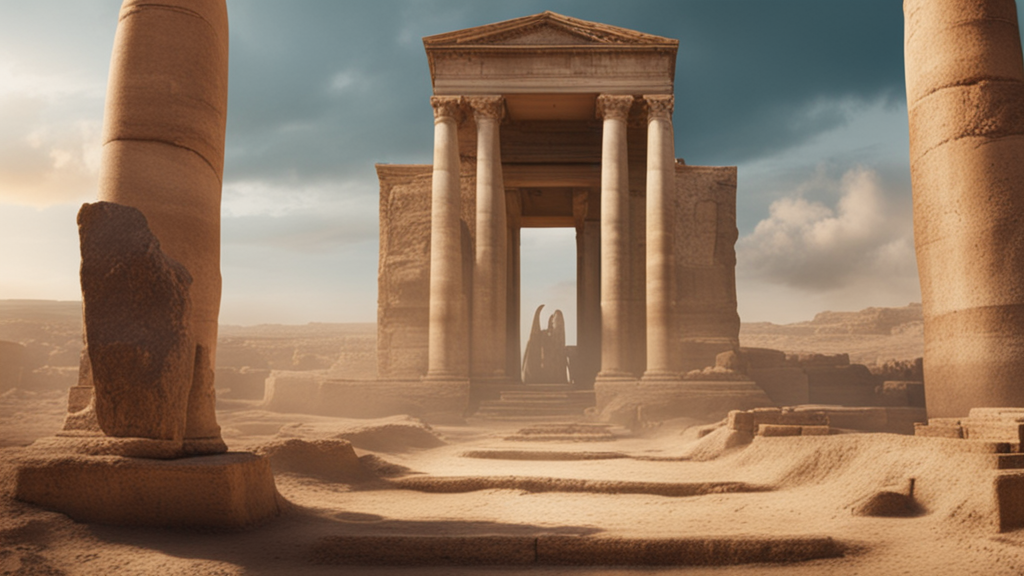
God’s Chariot and Secrets in Stone: Top Biblical Archaeology Stories of 2025 (and Why They Matter Right Now)
The Hidden Spiritual Conflict
Archaeology is trending again—“God’s chariot” in the desert, inscriptions naming biblical figures, and stones that seem to speak. But beneath the excitement lies a conflict that’s as old as Eden: will we trust God’s Word because it is God’s Word, or only when a stone agrees with us?
Our generation is captivated by what we can verify with a drone, a lidar scan, or a lab report. We want God under a microscope. Yet Scripture warns that sight alone never saves. Israel saw the Red Sea split—and still doubted (Psalm 106:7–13). Thomas touched the resurrected Christ—and Jesus answered, “Blessed are those who have not seen and yet have believed” (John 20:29).
The modern spiritual battle is subtle. We are tempted to outsource faith to artifacts and outsource discipleship to headlines. We scroll, we nod, we share—but do we obey? When stones cry out (Luke 19:40), it’s not to replace our witness. It’s to rebuke our silence.
Meanwhile, the cultural noise is deafening: political fear, economic anxiety, AI’s dizzying pace, and the loneliness epidemic. Archaeology can stir awe, but awe must become allegiance. The deepest question is not, “Did they find God’s chariot?” but, “Is Christ enthroned in my heart?” (1 Peter 3:15).
The news matters. But what it reveals about our hearts matters more.
What the Bible Really Says
Scripture never fears investigation. The God who speaks is also the God who acts in history (Exodus 3:15). But Scripture also sets the terms: the Word interprets the world, not the other way around (Psalm 119:105; John 17:17).
1) Stones Remember—But They Cannot Repent
When Joshua led Israel into the land, he set up stones as a witness: “When your children ask… ‘What do these stones mean to you?’ then you shall let your children know” (Joshua 4:6–7). Archaeological finds function like that—memory markers. They can point to God’s faithfulness. They can train our children to ask the right questions. But stones cannot bow the knee. Only people can.
Jesus warned of a generation that demanded signs but refused surrender: “An evil and adulterous generation seeks for a sign” (Matthew 12:39). Signs matter, but they are not a substitute for repentance (Romans 2:4). Artifacts confirm history; only the Spirit convicts hearts (John 16:8).
2) The God of the Chariot Is the God on the Throne
Headlines about “God’s chariot” evoke Ezekiel’s vision—the whirling wheels, the living creatures, the blazing glory (Ezekiel 1:15–21). Ezekiel wasn’t describing a museum piece; he was beholding the mobile throne of the Sovereign God who is not confined to a temple or a territory (Ezekiel 1:26–28). The vision declared this: even in exile, God is enthroned. He moves. He rules. He comes.
So whether archaeologists find a chariot wheel or an ancient relief, the biblical testimony stands: the Lord rides upon the storm (Psalm 104:3), commands the nations (Psalm 22:28), and “upholds the universe by the word of his power” (Hebrews 1:3). No discovery can add to His sovereignty; at best, it can echo it.
3) Inscriptions May Name Kings—Scripture Reveals the King of Kings
Archaeology often elevates faith’s plausibility by aligning with the Bible’s historical framework—names like Hezekiah, David, Pontius Pilate. This is helpful against the modern myth that faith is fiction. Yet the gospel is not a footnote to an inscription; it is the living announcement that “Christ died for our sins… was buried, [and] was raised on the third day in accordance with the Scriptures” (1 Corinthians 15:3–4). Artifacts can point to the stage; only Scripture unveils the plot.
The Bible consistently frames history within covenant: God’s promise to Abraham (Genesis 12:1–3), His law through Moses (Exodus 20), His throne to David (2 Samuel 7), and His New Covenant in Christ (Jeremiah 31:31–34; Luke 22:20). Archaeological finds can corroborate, but they cannot consummate. Only Jesus does (Hebrews 8:6–13).
4) Evidence Is a Servant, Not a Master
The Bereans were commended not for digging in the dirt but for searching the Scriptures daily (Acts 17:11). Genuine inquiry is righteous when it submits to God’s voice. When evidence serves the Word, faith is strengthened; when it masterfully edits the Word, faith is shipwrecked. Paul warned against “knowledge” that puffs up (1 Corinthians 8:1) and arguments that exalt themselves against the knowledge of God (2 Corinthians 10:5). Wisdom is to “test everything; hold fast what is good” (1 Thessalonians 5:21), measuring by the canon of Scripture.
5) Prophecy Anchors Us When Headlines Fade
Cultures forget, artifacts decay, and trending stories cool. But “the word of the Lord remains forever” (1 Peter 1:24–25). Prophecy—fulfilled and future—anchors believers when timelines blur. God promised the Servant King (Isaiah 53), and Christ fulfilled it (Luke 24:25–27). God foretold the outpouring of the Spirit (Joel 2:28–32), and Pentecost came (Acts 2:16–21). He promises the return of Jesus (Revelation 22:12), and every excavation of human glory only underlines our need for the only Savior (Acts 4:12).
6) Faith Comes by Hearing, Not by Excavating
Paul writes, “Faith comes from hearing, and hearing through the word of Christ” (Romans 10:17). Archaeology can amplify the plausibility structures of faith in the public square. That’s a gift. But the instrument God uses to save is the gospel preached. If every desert yielded a museum and every tel confessed to Christ, the cross would still be our only boast (Galatians 6:14).
7) The Church Is God’s Living Exhibit
Jesus said, “By this all people will know that you are my disciples, if you have love for one another” (John 13:35). The most powerful apologetic is not an inscription but a community transformed—justice pursued (Micah 6:8), holiness embraced (1 Peter 1:15–16), generosity overflowing (2 Corinthians 9:6–8). Stones can confirm dates; saints display resurrection life (Romans 6:4).
3 Steps for Believers Today
Step 1: Read the News Through the Word
-
Action: Before sharing any archaeology headline, read at least one Scripture passage related to it—Ezekiel 1 for “God’s chariot,” Joshua 4 for memory stones, Luke 19:40 for “stones crying out.”
-
Why: This trains your heart to let the Bible lead the narrative. “Your word is a lamp to my feet and a light to my path” (Psalm 119:105).
-
Practice: Set a weekly rhythm—10 minutes to scan news; 20 minutes to sit with the text. Ask, What attribute of God is on display? How should I obey today?
Step 2: Turn Awe Into Obedience
-
Action: When a discovery stirs your wonder, choose a concrete obedience in response—confess a sin (1 John 1:9), reconcile with a brother or sister (Matthew 5:23–24), or share the gospel with one person (Romans 1:16).
-
Why: Signs point to surrender. “Be doers of the word, and not hearers only” (James 1:22).
-
Practice: Keep a “Stone and Step” journal. For each headline that excites you, record one step of obedience taken. Let memory become movement.
Step 3: Stabilize Your Life with Unshakable Promises
-
Action: Memorize promises that outlast the news cycle—Isaiah 40:8; Matthew 24:35; Hebrews 13:8; Romans 8:31–39.
-
Why: In a world anxious about politics, AI, and cultural fragmentation, God’s promises provide ballast. “We have this as a sure and steadfast anchor of the soul” (Hebrews 6:19).
-
Practice: Pair each promise with a present pressure:
- AI uncertainty → James 1:5 (ask for wisdom).
- Political fear → Psalm 2 (the nations and the Son).
- Loneliness → Psalm 23; John 14:18 (He will not leave you as orphans).
- Financial stress → Matthew 6:31–34 (seek first the kingdom).
A Prayer for God’s Chariot and Secrets in Stone
Sovereign Lord, enthroned above the cherubim and riding on the wings of the wind (Psalm 18:10), we praise You because heaven is Your throne and the earth is Your footstool (Isaiah 66:1). When stones speak and discoveries arise, let Your Word speak louder. Guard our hearts from chasing signs while neglecting surrender (Matthew 12:39). Make us like the Bereans, eager and anchored, testing everything by Scripture (Acts 17:11).
Jesus, King of kings, we confess that we often prefer proof over obedience. Forgive our doubt, our pride, and our distraction. By Your Spirit, turn awe into allegiance. As Ezekiel saw Your glory in exile, let us behold Your rule in our chaos (Ezekiel 1:26–28). Fix our eyes on the cross and empty tomb, the greatest revelation in history (1 Corinthians 15:3–4).
Holy Spirit, teach us to number our days (Psalm 90:12). Help us parent with courage, work with integrity, vote with wisdom, and witness with love. When the news cycles fade, root us in the promises that cannot fail (1 Peter 1:24–25; Hebrews 13:8). Make the Church a living exhibit of Your grace—holy, humble, and bold (John 13:35; 1 Peter 1:15–16).
Father, use every ‘secret in stone’ to stir repentance in us and revival among us. Let the nations see and fear, and put their trust in You (Psalm 67:1–3). We pray in the name of Jesus, our steadfast anchor and soon-coming King (Hebrews 6:19; Revelation 22:12). Amen.
Did this resonate nicely?