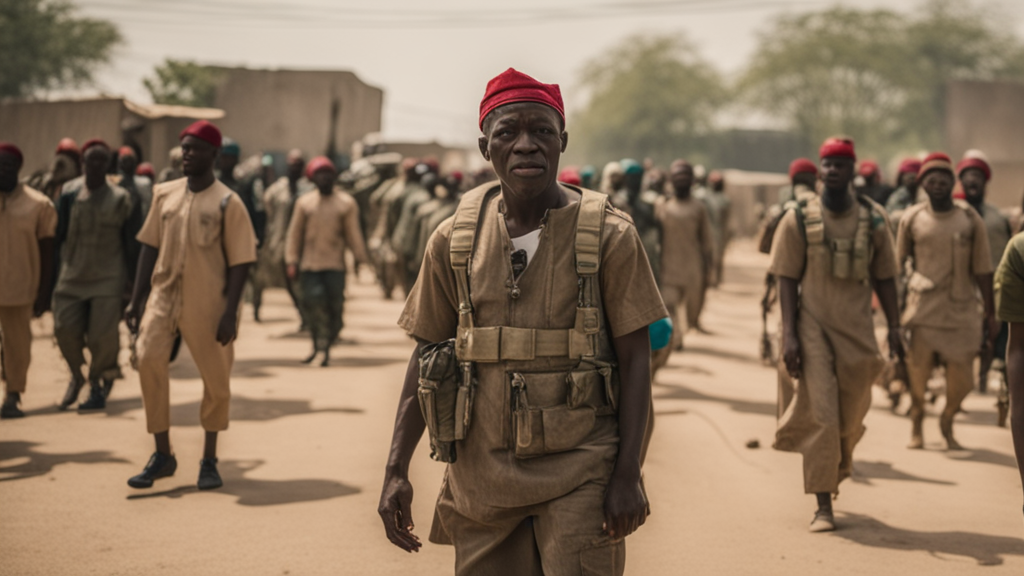
Nigeria in Crisis: 160 Christians Kidnapped and a Global Wake-Up Call—What Heaven Is Saying Now
The Hidden Spiritual Conflict
The abduction of over 160 Christians in Nigeria is not just a regional tragedy—it is a mirror to the Church’s calling in a world on fire. Governments will argue policy. Candidates will call for coalitions against terror. But Scripture insists that the deepest conflict is not fought on ballot lines or battle lines alone; it is waged in the unseen realm where wickedness plots to crush faith, intimidate witness, and fracture hope.
For we do not wrestle against flesh and blood, but against the rulers, against the authorities, against the cosmic powers over this present darkness... (Ephesians 6:12)
The devil’s strategy is ancient: sow fear, scatter the flock, silence the gospel. Kidnappings are not only crimes—they are assaults on the imago Dei and on the mission of the Church. Yet the Bible does not leave us panicked or paralyzed. It names evil clearly, calls for justice boldly, and anchors us in a hope nothing can kidnap.
Many are the afflictions of the righteous, but the LORD delivers him out of them all. (Psalm 34:19)
This crisis matters because the Body of Christ is one body. When one member suffers in Kaduna or Plateau, the whole Church must feel it in Chicago, Seoul, São Paulo, and Lagos. This is not someone else’s war. It is ours—because it is Christ’s.
If one member suffers, all suffer together; if one member is honored, all rejoice together. (1 Corinthians 12:26)
The headlines press us to ask: Will we respond with outrage alone, or with the kind of faith that moves history? Will we settle for commentary, or rise into intercession, advocacy, and sacrificial unity? The time for a lukewarm Church is over.
Wake up, and strengthen what remains... (Revelation 3:2)
What the Bible Really Says
1) Evil is real—and it is not ultimate
Scripture does not minimize violence or spiritual opposition. Jesus Himself forewarned His followers:
"In the world you will have tribulation. But take heart; I have overcome the world." (John 16:33)
Persecution, kidnapping, and terror are grim realities. Yet the cross and the empty tomb proclaim a deeper truth: evil will not have the final word. The resurrection shattered the monopoly of fear. Those who belong to Christ carry an unconquerable hope.
The light shines in the darkness, and the darkness has not overcome it. (John 1:5)
2) Justice is God’s will—not an optional virtue
God’s heart burns for the oppressed and the captives. He does not shrug at terror. He commands rulers to wield authority for good.
Give justice to the weak and the fatherless; maintain the right of the afflicted and the destitute. (Psalm 82:3)
Rescue those who are being taken away to death; hold back those who are stumbling to the slaughter. (Proverbs 24:11)
For he is God’s servant for your good... he does not bear the sword in vain. (Romans 13:4)
This means governments have a divine mandate to protect the vulnerable, dismantle terror networks, prosecute perpetrators, and safeguard religious freedom. Christians should call for wise, coordinated action—local, regional, and international—to prevent further atrocities and secure the release of captives (Isaiah 1:17).
Learn to do good; seek justice, correct oppression; bring justice to the fatherless, plead the widow’s cause. (Isaiah 1:17)
3) The Church fights on two fronts: prayer and public good
While the state bears the sword, the Church wields intercession, witness, and sacrificial love.
The weapons of our warfare are not of the flesh but have divine power to destroy strongholds. (2 Corinthians 10:4)
This is not escapism. It is realism. Prayer aligns earthly events with heavenly authority. The early church prayed Peter out of prison (Acts 12:5–11). Paul and Silas prayed and sang in jail—and God shook the prison (Acts 16:25–26). We pray expecting God to move, and we act as His hands and feet.
4) Love remains the radical alternative to hate
When Christians are targeted, our temptation is cynicism or rage. The gospel calls us higher: to seek our enemies’ repentance even as we demand justice.
Love your enemies and pray for those who persecute you. (Matthew 5:44)
This is not passivity. It’s a supernatural refusal to let evil disciple our hearts. We contend for captives’ freedom and perpetrators’ accountability while praying that persecutors become Pauls (1 Timothy 1:13–16).
5) Suffering refines the Church
This is a hard word, but a biblical one. Persecution has always purified the Church, separating convenience from conviction.
Do not be surprised at the fiery trial... as though something strange were happening to you. (1 Peter 4:12)
Indeed, all who desire to live a godly life in Christ Jesus will be persecuted. (2 Timothy 3:12)
We grieve the kidnapped. We fight for their release. And we ask God to use this crucible to awaken lukewarm hearts, ignite evangelism, and unify divided believers.
6) God sees every captive—and He will judge the earth
He has sent me to proclaim liberty to the captives and recovering of sight to the blind, to set at liberty those who are oppressed. (Luke 4:18)
Shall not the Judge of all the earth do what is just? (Genesis 18:25)
No hostage is hidden from Him. No crime will be ignored. The gospel promises both a Savior who suffers with us and a King who will return to set every wrong right (Revelation 21:4; 22:12).
3 Steps for Believers Today
We cannot read this news and scroll on. Faith acts. Here are three urgent, biblical steps.
Step 1: Pray like the early church—daily, informed, and united
- Set a daily time to intercede by name and region for believers in Nigeria (Hebrews 13:3). Use reputable prayer updates from ministries serving persecuted Christians.
- Pray Psalm 91 and Psalm 27 over captives and their families. Ask for angelic protection, courage, and miraculous release (Acts 12:5–11).
- Pray for Nigerian authorities to possess wisdom, courage, and integrity to locate hostages and dismantle terror networks (1 Timothy 2:1–2; Proverbs 21:1).
- Pray for the Church in Nigeria to be bold, unified, and resilient, shining as a light in darkness (Matthew 5:14–16; Acts 4:29–31).
Remember those who are in prison, as though in prison with them. (Hebrews 13:3)
Step 2: Advocate for justice—locally and globally
- Contact your representatives and urge strong, coordinated efforts with Nigerian leaders to combat terror, support rescue operations, and prioritize religious freedom (Proverbs 31:8–9).
- Support credible NGOs and Christian ministries providing trauma care, safe relocation, and economic rebuilding for survivors (James 1:27).
- Use your platforms to keep attention on victims, not just on politics. Share verified updates, not rumors (Proverbs 12:17; Ephesians 4:25).
- Encourage your church to host a focused prayer night and take a benevolence offering for persecuted believers (2 Corinthians 8:1–5).
Open your mouth for the mute, for the rights of all who are destitute. (Proverbs 31:8)
Step 3: Fortify your own soul—because persecution tests all of us
- Put on the armor of God daily (Ephesians 6:10–18). This is not metaphorical poetry; it is survival gear.
- Practice fasting and Scripture meditation to harden your hope (Matthew 6:16–18; Psalm 119:11).
- Cultivate courageous community. Isolation breeds fear; fellowship breeds faith (Hebrews 10:24–25).
- Refuse the spirit of fear. Counter anxious headlines by confessing God’s promises aloud (2 Timothy 1:7; Isaiah 41:10).
Be watchful, stand firm in the faith, act like men, be strong. Let all that you do be done in love. (1 Corinthians 16:13–14)
A Prayer for Nigeria’s Captives and the Church
Father, in the name of Jesus, we come as one Body for our brothers and sisters in Nigeria. You see every captive, every crying parent, every terrified child. Stretch out Your hand to save.
God of justice, break the arm of the wicked and call their deeds to account until there is no more terror (Psalm 10:15). Confuse the plans of violent men. Expose networks of kidnapping. Give Nigerian authorities courage, wisdom, and success. Move global leaders to act with integrity, speed, and unity (1 Timothy 2:1–2; Proverbs 21:1).
Lord Jesus, set the captives free. Send angels to guard them. Open prison doors like You did for Peter. Grant miracles that cause entire communities to say, “The Lord has done great things” (Acts 12:7–11; Psalm 126:3).
Holy Spirit, comfort families who wait and weep. Fill the Church in Nigeria with boldness to proclaim the gospel with signs and wonders (Acts 4:29–31). Protect pastors, aid workers, and local believers who risk much to serve. Let the blood of the martyrs be the seed of revival, and let this crisis birth a great awakening.
We pray for persecutors: pierce their hearts, halt their hands, and lead them to repentance. Turn Sauls into Pauls (Acts 9:1–6; 1 Timothy 1:13–16). May justice roll down like waters and righteousness like an ever-flowing stream (Amos 5:24).
Strengthen us to watch, pray, give, and stand. Make us faithful in small things and fearless in great things. Come, Lord Jesus. Vindicate Your people. Heal the land. Amen.
We do not get to choose the headlines, but we do choose our response. As the world debates strategy, heaven is recruiting intercessors and ambassadors. Let the Church rise—eyes clear, knees bent, voices loud. The darkness will not have the last word. Christ already does (Colossians 2:15; Revelation 12:11).
Did this resonate nicely?